The State of Your HR Goals

Our clients are often looking for help in leveraging ExactHire solutions to meet their HR goals. Whether it be optimizing job templates, setting up custom reports, or integrating assessments into their hiring process, helping clients succeed is extremely rewarding for me. So it’s no surprise that ExactHire clients and HR success were on my mind last week when I was listening to Indiana’s Governor Holcomb deliver his 2020 State of the State address.

It’s All About Jobs and Impact

As I listened to the speech, albeit while wrestling my toddler into his pajamas, I made a mental note of how many times I heard the word jobs (or job). Because I know the mind can play tricks and make a person biased toward items they are most familiar with, it made me wonder if I was actually hearing the word job more frequently than other words.

So I ran a quick analysis on the speech and the word jobs was said 13 times. When taking out pronouns and articles, the only other words that were more frequently used were: Indiana, year, and state. I’m glad to know that my mind wasn’t playing a trick on me!

I feel like this is worth pointing out because the work of an HR department is important. I feel like all of you in human resources, posting your jobs, looking for the right new hire, are doing work that impacts not only your organization, but your state and country, too. It wasn’t that long ago when a human resources department seemed to be a thing of luxury. But now we have the ear of our lawmakers; we battle the largest challenge at most organizations; and we invest in the biggest assets an organization has – its employees.

While you might feel frustrated that you cannot seem to find the right hire or that filling a position is taking longer than expected, do know that you are taking on a critical component of the economy – working on things that make an impact larger than you may have initially thought, with ripples expanding outward – and people are taking note.

Helping You Achieve Your HR Goals

No business can succeed without setting goals. The most successful organizations are constantly reviewing past performance and making appropriate adjustments in order to achieve future goals. While this applies to whole organizations, it’s also true for individual departments. What are your HR goals? Where can you improve your outcomes or efficiency?

If you are interested in brainstorming ideas on how you can improve your applicant pool, increase the speed of onboarding new hires, or test drive software that may create efficiencies for you, don’t hesitate to give myself or any of my teammates a call.

How to Effortlessly Use Texting to Hire Hourly Workers

You only have to look at your smartphone’s weekly screen time report to know that the amount of time we spend accessing our phones is increasing at a relentless pace. Whether our pervasive mobile usage troubles or encourages you, it is undeniable. In fact, according to research done by Hitwise, the average device split for searches was 72% for mobile and 28% for desktop in 2017.

In consideration of the amount of time people spend doing web searches on phones, naturally we’re in a climate where employers must adapt and leverage mobile communication in their hiring process–particularly while unemployment is at an epic low.

Today, the name of the hiring game is speed, and this is painfully realized in industries that employ a large number of hourly, non-exempt workers. The reality of those employers is that if they hesitate to respond quickly, the competitor across the street has already paid their would-be new hire for their first shift.

Signs that you’re not effectively using a text recruiting strategy

We can and should all continuously experiment with and tweak our hiring processes. The hiring landscape changes so quickly that constant attention is required. However, there are telltale signs that help identify when your organization has a more significant mobile communication problem.

Phone ghosting

I was initially surprised a couple of years ago when I heard that many employers of hourly workers, in particular, struggled to get candidates to respond to phone invitations for an initial interview. If your recruiters are frequently encountering full voice mail boxes when reaching out to schedule a conversation; or they discover that a candidate doesn’t even have voice mail set up, then it’s time to try something other than a phone call.

Candidate shelf-life

It’s not uncommon for employers who rely on large numbers of hourly workers to empower the managers and assistant managers of various store locations to screen candidates and invite them to proceed in the hiring process. Because hiring is just one of myriad operational responsibilities for these managers, they don’t always respond to candidates as quickly as may be necessary in this job market.

This failure in prompt candidate engagement all too often sinks a retail location’s recruiting efforts before the ship even leaves port. Or, maybe a manager is in such tremendous need of candidates that he recognizes this deficiency and immediately calls or emails new applicants. However, because many hourly workers tend to fill positions that aren’t necessarily accompanied by a desktop computer or an office landline, their tendency is to communicate via text rather than voice mail or email.

If a job seeker doesn’t recognize a general manager’s incoming phone number, chances are she’ll avoid taking the call–meanwhile, if she has applied to multiple hourly positions, a savvy competitor is grabbing her attention and her time via text before she checks her inbox.

Standardizing communication and respecting candidate privacy

In the absence of a strong hiring software platform that allows managers to contact job candidates via text message, many managers of hourly workers will resort to their own smartphone to contact applicants to connect for an interview.

This is commonplace; however, it isn’t in the best interest of the employer. In many cases, these applicants were not prompted to opt-in to receiving text messages during the job application process–why would they if the applicant tracking system didn’t support text messaging?

Not only is this a privacy concern as it does not allow job candidates to formally opt-out of text messages once they are initiated, but practically speaking, candidates won’t necessarily be on the lookout for text communication from your organization.

Arguably, they will probably quickly adapt given that texting is second nature to many of them, but your organization is missing an opportunity to set expectations about the hiring process and endear itself to candidates…candidates who are in hot demand.

Moreover, when general managers take texting candidates into their own hands outside of an ATS, there is no guarantee of adequate communication documentation with the job applicant. By utilizing applicant tracking software that includes in-application texting functionality, an employer is ensuring that multiple users of the system have access to review communication between candidates.

After all, in this highly competitive recruiting landscape, recruiters have full plates and may be called to work on different job requisitions if a co-worker is on vacation, on leave, etc. What you don’t want is for only one person in your organization to have access to candidate conversations–that’s a significant obstacle for a scaling company.

Why is mobile recruiting an opportunity for hourly jobs in particular?

Hourly workers are often the front-line defense (or offense) for your organization. They are the individuals who are most likely to interact directly with your customers. And, unfortunately, they are often in the positions with the highest turnover–whether that is related to the nature of the job, the typical lower pay (relative to exempt positions), and/or the lack of benefits (at least in the case of part-time hourly employees). In a job market flooded with open positions, candidates will leave for a few cents more per hour.

You see this happen in positions like

  • hosts and servers at your local restaurant,
  • cashiers at your retail store,
  • LPNs at your healthcare facility,
  • service techs at your automotive dealership, and
  • direct support professionals (DSPs) for nonprofits.

People who fill these types of positions tend to be on the go (i.e. not doing a desk job) and may have more than one part-time job at a time. They don’t get into email or voice mail as frequently (if at all), and so they need fewer barriers to communication when it comes to job consideration, as well as long-term engagement with an employer.

Considering that over 58% of America’s working population fills hourly positions (BLS, 2017), there’s real opportunity to leverage texting to be the first to attract and engage hourly job candidates. I’m offering the following steps to help you position your organization as an earlier adopter of the mobile recruiting revolution.

6 steps to successfully use texting to hire hourly workers

1 – Create communication efficiency

Use pre-built text message templates within your applicant tracking system. Create and label them for different stages in the selection process for hourly workers. This saves store managers time when they need to hire three new retail associates–“yesterday!”

2 – Model the right texting behavior

Train your hiring managers on appropriate texting etiquette for your recruiting process. Does the language they use and the tone they convey support your overall employment brand? Additionally, make sure they understand how text messages will show up to the job candidate.

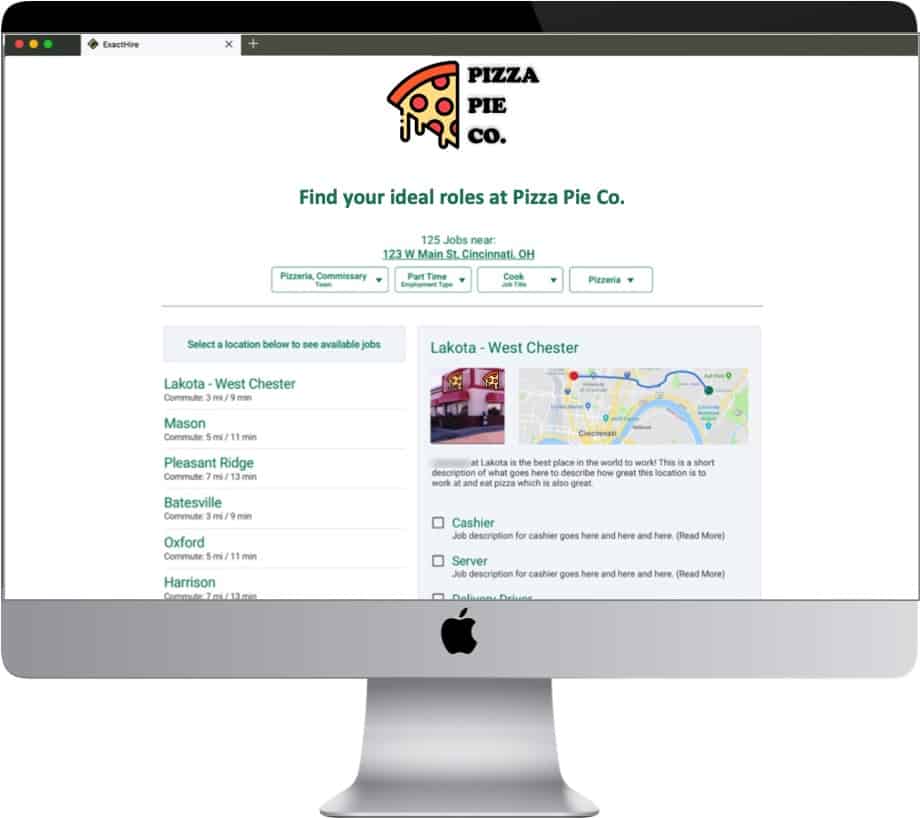
An easy way to accomplish this is to test the messaging feature from within a sample job application. Then, take a screenshot of how it appears to a recipient on your phone and share it with managers. This step will help them understand from what number(s) messages may originate, whether the sender’s name, job title and/or organization name are referenced, and how much of the message will appear on the preview screen before being cut off.

3 – Lightning fast speed

Use text to reply promptly to candidates once they’ve responded to your initial outreach. Don’t make the mistake of resting on your laurels once you have native texting functionality and take your sweet time to reply–jump on message responses!

Remember: texting affords job candidates fewer communication barriers to entry, so they expect organizations to respond quickly, too.

4 – Strategically plan text content

You should absolutely use text to reach all types of job candidates to screen and schedule interviews. However, text messages also present an opportunity–when used thoughtfully and selectively–to reach candidates who are on the fence about joining your organization.

Consider the potential impact of a personalized message sharing a link to a positive article about your company. Or, the likelihood that a hired candidate will end up ghosting you during the pre-boarding phase if you regularly connect with him to prepare him for his first shift.

5 – Flip the script on thank you notes

Use text messages to thank a job candidate for her time and preparation after you conduct an interview. That’s right–once upon a time, we expected job candidates to thank recruiters and hiring managers for their time in order to help them secure an offer–but times are changing!

Thank you notes are still an amazing gesture on the part of a job candidate, but they are no longer a mainstay for job offer consideration in today’s job market given the sorry state of many employers’ candidate pipelines.

Today is about sourcing, not screening. Break through the clutter by proactively thanking candidates with a simple text message and humanize your hiring process.

6 – Hiring process visualization

When candidates know what to expect from the hiring process it

  • helps them visualize how they see themselves interacting with your organization,
  • may allow them to more adequately prepare, and
  • it makes it easier for them to say “yes” when you make the job offer.

You can use text to quickly outline the various hiring process steps at the onset of the recruiting process. Think of this step as reducing friction for distracted job seekers who probably have many options before them. If you can grease their understanding runway regarding your job opportunity–and you can do so quickly–you’ll be the employer who is poaching job candidates from competitors across the street.

Mobile recruiting facilitated by text message communication is here to stay. Armed with the steps outlined above, you’re on the way to engaging the job seekers in your hourly job candidate pipeline and positively impacting your employer’s bottom line.
ExactHire Hiring Software | Text Recruiting

Audit Your Recruitment Process Marketing Content to Delight Job Seekers

Use this audit checklist to evaluate and improve the effectiveness of your recruiting process-related content.

I’m not the first one to say that recruiters, human resources professionals and marketing specialists should team up to create content that engages top talent in your recruitment process. However, how many of you have actively engaged in measuring the impact of that HR/marketing “bestie” partnership?

If you don’t have a benchmark from which to grow, your organization will have a tough time figuring out which recruiting content is worth the investment of time and money.

Maximize the effectiveness of your recruiting content with a periodic audit of your hiring process-related promotional assets. Establishing KPIs for content will make it easy to quickly identify existing content gems, as well as guide you in developing additional content that will resonate.

Auditing your recruitment content is as easy as 1-2-3

Let’s examine the audit process and recap with a free recruitment process marketing content scorecard.

1 – Determine your recruitment content audit’s focus

You can’t decide if you’re investing your time and resources to produce recruitment content wisely until you settle on the scope of your audit.

Don’t sweat it if you can’t tackle a comprehensive audit in your first attempt. If you can–great–though it will depend on your recruiting volume and what you’ve previously tackled in terms of content analysis.

It’s okay to segment an otherwise comprehensive audit into smaller sub-audits–just have an overall plan in place for which audit type should be attempted first.

Potential content audit focuses:

  • Employment brand quality: consider whether your recruitment content is well written, and whether it aligns with what you’ve defined as your organizational employment brand.
  • Hiring process stage: analyze whether a specific hiring process stage is addressed in each of your content assets, and if job seeker questions characteristic of that stage are answered by the content.
  • Job board optimization and search engine optimization (SEO): review your job listing rankings on third party job boards and recruitment content performance on external search engines to identify improvements that will create better digital awareness for your employment opportunities.
  • Content compliance: examine whether your content meets any industry- and/or government-related compliance requirements for your organization, including an analysis of your career content’s ability to attract a diverse set of job candidates.

2 – Settle on your audit evaluation factors

Your recruiting content evaluation process will be based on the type of audit you select. The audit factors must be easily measurable and align to your project scope.

Because this audit is a wonderful opportunity to connect the human resources and marketing teams in your company, ask the project champions from each of those departments to determine the ideal recruiting content audit criteria.

If we select a hiring process stage audit as an example, then HR and marketing might jointly evaluate factors like the content’s

  • alignment with overall employment brand,
  • specific hiring stage focus (e.g. awareness, consideration, conversion, retention and advocacy),
  • attempt to answer stage-appropriate job seeker questions,
  • call-to-action for the next step in the hiring process,
  • current distribution and promotion method by stage type, and
  • likelihood of being easily utilized by hiring stage stakeholders

As you prepare for an audit, you should also plan your intended project deliverables. Aside from a quantitative score for each recruitment content asset, deliverables can include other action steps to enhance content quality.

Potential hiring process stage content audit deliverables:

  • Documentation of all current content assets by hiring stage
  • Content gap analysis for certain hiring process stages
  • List of questions that individual content assets should answer at each hiring process stage
  • Action steps for your content library – content to retain, revise, create or expire
  • Template for creating content for each hiring process stage
  • Distribution strategy for each asset based on hiring process stage and content type (e.g. owned media such as your own career site, earned media such as a guest blog placement on an industry website, or paid media such as a sponsored job listing on a job board)

3 – Rank your recruiting process content

After you’ve married the appropriate content criteria with each asset, you’re ready to score your recruitment process content!

Please recognize that some things can be quantitatively evaluated (e.g. how many out of X job seeker questions are answered?) while others are subjective (e.g. does the narrative’s language support our employment brand initiatives?).

Now’s your chance to create your own evaluation form to standardize your existing and future recruitment content.

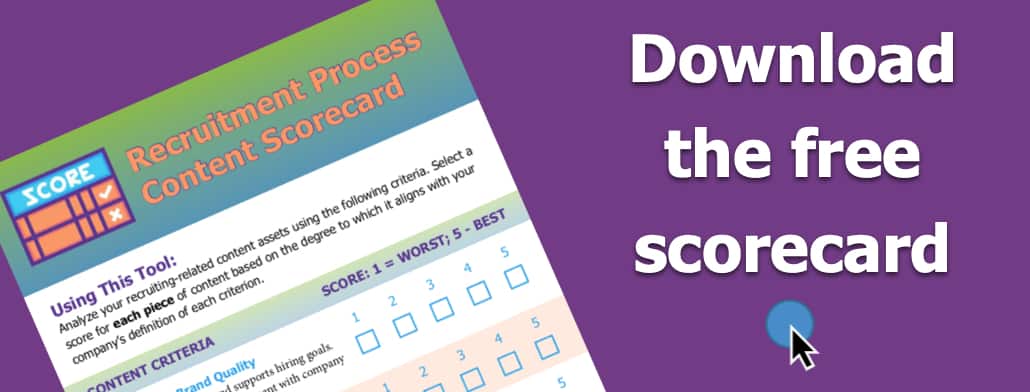
Need some help designing your employer’s scoring process? ExactHire created this recruitment process content scorecard to help you hit the ground running.


ExactHire Recruitment Process Content Scorecard

Recommendations that resonate

Your audit data is chock full of ideas on where you can start making an immediate impact on your recruitment process marketing. Best of all, it’s backed by a standardized content scorecard.

Use your scorecard analysis to spot trends. Does one aspect of your hiring process consistently fall short? Could others help implement some of the action steps due to their expertise in one stage of the process?

Backed by your audit data, you’re on your way to constructing a high-level recruitment process content strategy that will reinforce your employment brand and help convert more new hires.

Guide – Employee Onboarding 77 Ideas

9 Employer Strategies That Limit Ghosting

Even if you haven’t already heard the term employee “ghosting,” odds are you have still experienced the workplace trend. What is ghosting and why is it more relevant to your organization than ever?

From existing employees failing to show up for work and disappearing without a trace…to job seekers reneging on an accepted offer when a better one comes in last minute–ghosting occurs when someone you are counting on fails to appear and doesn’t give you any notice.

Why is this trend emerging now? Contributing factors may include a labor shortage, a tight job market, and younger generations’ popular preference for electronic correspondence over face-to-face conflict resolution. Not surprisingly, ghosting affects industries with a large number of hourly workers, but it’s also impacting the white collar worlds of technology firms, business services and healthcare.

Here are nine strategies to help scare off the ghosting trend in your workplace.

1 – Follow the Golden Rule

This is simple, yet worth restating with some regularity nonetheless. I frequently find myself telling my kids to “treat people the way you’d want to be treated.” And, the same goes for employees and applicants. Keep them informed, treat them with respect and be kind. For a long time, many employers got away with ghosting job seekers and interviewees, failing to respond to the messages of final stage candidates or even completely neglecting to decline them at the end of a hiring process.

Make sure your own recruiting tactics don’t include ghosting tendencies…turnabout is fair play! Recruiters can’t get away with the same bad behavior they may have had when unemployment wasn’t at the low that it is right now.

2 – Strategize the counteroffer

Considering that one of the insidious forms in which ghosting takes shape is that the employee doesn’t show up on his first day, you must anticipate job candidates receiving competitive offers–including a counteroffer from an existing employer.

Plan a strategy session with a newly hired employee at the time he accepts the offer and talk through various scenarios. Encourage him to brainstorm with you how he might fend off a counteroffer. Remind him to consider why he originally looked elsewhere and provide a template the candidate may follow to talk through his resignation with an existing employer.

3 – Leverage text recruiting

Since applicants (like the general population) rely on smartphones to screen their calls, in the age of spam robo-callers it is less likely that they will pick up the phone when you call them for the first time to schedule an interview. In my product research calls over the last year, many employers explained that job seekers they try to contact frequently don’t even have their voice mail box set up–or if they do, it’s full.

Make sure your hiring software includes the ability to text with candidates, and more importantly, ensure that incoming text message notifications to your job seekers adequately identify your organization, related job and recruiter name.

4 – Over-communicate with job candidates

Obsess about the communication piece of your employment brand. Counteract a potential eventual lack of communication on the candidate’s part with meticulous communication from the employer throughout the selection process. Job seekers will feel more informed and more engaged to reciprocate communication if they sense the opportunity may not work for them. Here are some specific communication tactics:

  • Set expectations about what the hiring process involves at the very beginning of the process (e.g. number of stages, requirements of each stage, duration of process, etc.).
  • Send updates to job seekers when target dates for various stages get delayed.
  • Invite candidates to share feedback about your process at different steps along the way–whether they are selected for the position or not.
  • Stay connected with silver medal candidates for future consideration. They are a great back-up if the gold medalist ghosts you, and more likely to come through for you in the next position if you keep them engaged in your pipeline through thoughtful messaging.

5 – Be transparent with those who refer candidates

Follow-up with referrers of candidates to thank them for their employee referral, and acknowledge your appreciation for the referral with the job candidate, too. This personal reminder puts pressure on the referred candidate not to let her friend down by ghosting the employer and risk damaging her reputation.

Not only does this practice help mitigate ghosting, but it also increases the likelihood that your existing employees will continue to refer you qualified candidates in the future. Remember–don’t ghost your own employees about referral outcomes when they take time to make a recommendation to you!

6 – Preview the employee onboarding experience

Create content that provides a thorough overview of your employee onboarding process to potential hires. This helps prevent the cognitive dissonance that they may otherwise feel about accepting an offer. If they’re excited about what to expect in their first year, then they’re much more likely to show up on their first day.

Additionally, give final stage interviewees a sneak peak into the employee experience by inviting them to do a job shadow before extending an offer. This simulation illustrates what it’s really like to work for your organization, and encourages candidates to self-select out of the process before you get to the ghosting let-down.

7 – Become a pre-boarding pro

Don’t go radio silent during the all too important pre-boarding process–that time between the accepted employment offer and the start date. This may last from a few hours to a few weeks depending on your organization and job category, but think about how to keep new hires feeling connected during this time.

Reflect on your culture and plan touch points with the new hire that make them feel welcomed to the team. Text a group photo, invite them to lunch before the start date and/or send them a swag bag at home. Ask the new hire to complete a “get to know you” sheet during pre-boarding, and then share info sheets about other employees with the new hire prior to the first day, too. This helps the new hire start to feel like a part of the team before the first day–which will make it harder to abandon the team without explanation.

8 – Flaunt your best attributes

Know your market and then understand which aspects of your compensation and benefits package and/or work schedule are highly attractive. While it is natural to highlight these attributes in detail in an employment offer, it’s a good idea to remind existing employees, too.

To help prevent employees from leaving unexpectedly for greener pastures, create a detailed total rewards summary and discuss it annually with workers to differentiate your unique value proposition from competitors. Make sure the summary highlights any continuous education opportunities, especially, so that employees not only understand their existing assets, but also their potential to improve their knowledge.

9 – Proactively thank candidates

Once upon a time, recruiters gave an edge to the candidates who sent the first thank you message (assuming all else was equal). However, today recruiters who don’t wait around, but rather proactively thank candidates following an interview are less likely to be ghosted. This follow-up is also a trigger for the organization to touch base with job seekers about timing for next steps in the process. And, as we learned in tip #4 above, over communication is a best practice.

It is unlikely that you will completely prevent ghosting despite your attentive efforts; however, the aforementioned tips are a proactive start in dramatically reducing its impact on your company.


Guide to Managing Evergreen Jobs

Employer Considerations for Posting and Managing Evergreen Jobs

When you think about where you spend the bulk of your time in the employee recruiting process, is a big chunk reserved for a certain type of position? If so, this role is probably an evergreen job.

Just as an evergreen tree appears green and alive all year long, evergreen positions require a constant flow of candidates because they experience high turnover and/or are positions that a large percentage of employees occupy. As a result, many companies keep these requisitions perpetually open on their job listings page in order to populate the candidate pipeline.

Evergreen jobs and turnover

Sourcing a steady flow of candidates to fill evergreen roles is essential–they are the positions critical to business success. Industries such as restaurant, healthcare, retail, call center and non-profit regularly source applicants for evergreen jobs such as server, home health aid, cashier, customer service representative and direct support professional.

Organizations often struggle with high turnover in these positions due to factors such as

  • the role being available on a part-time basis more frequently than full-time,
  • job seasonality (or seasonal availability of candidates),
  • low barriers to entry that make it easy for candidates to get a similar job elsewhere, and
  • low unemployment leading to more accessible wage increases at competitive employers.

Evergreen job hiring challenges

Hiring employees to fill evergreen positions can be tricky for a variety of reasons.

Misleading reporting

If you tend to keep the same job listings open all the time while regularly hiring candidates, it’s easy to unintentionally skew reporting in the name of ease. While the same job listing ID may remain open for a year (which can save time on reposting the job every few months), it will be harder to report on which referral sources, job description text (if you tweak it frequently with overwrites) and other factors lead to the successful hiring of multiple individuals because they are all tied to the same requisition. A good rule of thumb is to close out an existing evergreen requisition when a candidate is hired for that role, and then use the previous requisition as a template for easily creating a new one.

Job boards vs. organic search

While external job boards such as Glassdoor and Indeed favor fresh job listing IDs that aren’t reposted too frequently, search engines like Google spotlight tenured job description pages that have evergreen content (e.g. new imagery, comments, video, and other structured data). So what’s the right answer? Temporary job listing ID pages or persistent job description overviews?

You can benefit from both. Use your applicant tracking system to refresh a job listing for an evergreen role by closing old job listing IDs and using them as a template to create a duplicate job listing (with a new ID) every 60-90 days. Then, consider adding evergreen content pages within your ATS portal or on your corporate website that

  • list details about what to expect in the role,
  • answer frequently asked questions about the job,
  • highlight video testimonials from other employees in that position, and
  • link to a list of the job listing(s) currently open for that role.

With the dual approach, job seekers stand to find your recently posted job listing on external job boards, as well as via keyword-specific search queries on search engines.

Hiring compliance can be impacted

Care should be taken with determining how the frequency of evergreen requisition posting may impact an employer’s Affirmative Action Plan (AAP) compliance efforts. If the same job listing ID is kept open for an entire year–and we assume at least one candidate is hired from that requisition–then the entire year’s worth of internet applicants must be included in the applicant pool considered for adverse impact. In contrast, if a single requisition is kept open for only one quarter, and only one person is hired during that time, then the pool for adverse impact analysis is smaller which is generally preferable.

By periodically opening new requisitions–even when a hire does not take place in a period of 60 or 90 days–employers put themselves in a better position for compliance and limit their exposure. NOTE: If no applicants from a quarter’s requisition are hired, then the job ID can be closed and none of the applicants must be reported in the AAP data.

Managers at different locations

In the world of evergreen hiring, the location at which a future employee may work when he first applies to an evergreen position isn’t always apparent. And, depending on the industry and size of organization, different hiring managers likely manage candidate screening and/or interviewing at various locations.

Unless internal expectations are clearly set about how managers access a candidate pool that may be shared by different branches, the candidate experience could be hampered by poor communication from a variety of different locations vying for the same candidate. This can be exacerbated in a tight labor market with low unemployment as general managers compete for workers in high turnover, hourly, part-time positions.

Within the retail and restaurant industries, in which some brands have both corporate and franchise-owned stores, careful attention must be paid to limiting franchisor access to job applicants for franchisee-owned locations in order to avoid vicarious liability. When implementing hiring technology in this situation, it’s critical to understand how different applicant pools will be separated for administrators. At the same time, it’s important to avoid a confusing application process for job seekers who perceive all locations to be one brand.

Best practices for managing evergreen positions

Now that we’ve reviewed considerations for posting and managing evergreen positions, let’s cover best practices to improve the chances of your success in hiring individuals for these roles.

Understand what causes turnover

Only by analyzing factors that cause your employees to leave, will you be able to adjust their experience to prolong tenure and benchmark success. Consider the impact of job factors such as your organization’s

  • work schedule flexibility
  • pay rate relative to competitors
  • ability to communicate the proximity of public transportation, and
  • opportunities for continuous learning and advancement.

With an understanding of the primary drivers of turnover, you can re-imagine the employment experience to mitigate these factors. Proactively communicate how you address these items with job seekers in your career content and utilize an applicant tracking system that makes it easy for job candidates to search positions near their bus route. For example, the new hiring software platform that ExactHire is building allows candidates to optionally enter their address to see nearby locations with open job suggestions.

Geo-fenced Job Listing Search | ExactHire

Set internal expectations about hiring efficiency

Recruiters will have a greater impact on organizational success when they rally hiring managers around what to expect from the hiring process. These conversations include topics such as

  • what the hiring market looks like and which factors impact organizational turnover (e.g. what it’s going to take to keep employees),
  • the current velocity of hire and a reasonable expectation for number of hiring processes that can be managed successfully at once (e.g. should we hire more recruiters or consider Recruitment Process Outsourcing (RPO)?),
  • how promptly assigning statuses to candidates and entering hire dates in an ATS is critical to calculating time to hire and team efficiency,
  • the ideal dollar amount to plan for employee attrition in the operating budget, and
  • how to manage headcount appropriately–is it a set number of positions per job opening or can it flexibly fluctuate depending on need?

Consider job listing duration

Close out aging job listing IDs at least every three months or whenever you make a hire for the position–whichever is sooner. The impact of this practice is two-fold:

  1. By separating batches of applicants for an evergreen job into 90-day chunks–each with its own separate requisition–you limit the likelihood that the OFCCP will take a closer look at your data in an AAP audit because your data pool is smaller (i.e. a separate pool for each job listing ID) and therefore not likely to be statistically significant.
  2. By reposting evergreen jobs periodically with new job IDs, you’re ensuring that the posting date appears relatively recent to potential job applicants. However, even a 30-day old position may deter eager job seekers. Consider including text that describes the role as an evergreen position within the body of your job description. By letting candidates know that you’re always sourcing for this position, they will be less likely to overlook a couple-month-old job listing.

Create a landing page for evergreen jobs

To balance the effects of reposting job listing IDs on a quarterly basis, give your evergreen roles a surge of search engine optimization (SEO) by creating permanent job overview pages (on either your ATS or your corporate website) for the positions that are always (or soon to be) in supply. Include page elements such as

  • relevant keyword-rich content in headers and body text
  • video testimonials from employees in the same role
  • a frequently asked question section to answer common job-related inquiries
  • an overview of the steps involved in the hiring process
  • the unique benefits of the position, and
  • call-to-action buttons directing page visitors to a filtered list of the specific requisitions currently available for this type of role.

Reduce hiring funnel friction

Put yourself in the shoes of a job seeker and assess whether it is easy to find your jobs, easy to apply and easy to communicate with recruiters and hiring managers. While making the selection process efficient is a priority for any kind of job, it is mission critical for evergreen positions since a large volume of candidates must be sourced to meet the company’s hiring needs.

  • Easy to find – Easily share your job listings to external job boards and social media streams within a modern applicant tracking system, but also consider paid recruitment marketing avenues such as retargeting display ads that show content to job seekers who previously interacted with your employment brand.
  • Easy to apply – Utilize two-step applications to allow candidates to provide the basics in the first half of the application process. Shortening an application’s first phase will drive better applicant conversion. Also, select pre-employment assessments that don’t require too much time for an applicant to complete when presented at the point of application. Longer assessments can be utilized later in the selection process.
  • Easy to communicate – Meet job seekers where they are…which often is on their phone rather than a laptop. Incorporate text messaging into the candidate communication process as many individuals interested in evergreen jobs may be screening their calls and failing to set up their voicemail inboxes.

Incorporate pre-employment testing

Know what employee success in your evergreen roles looks like by assessing your current superstars and distilling their results down to the key traits that most heavily predict performance. Then, benchmark for these traits by creating a model profile within your employee assessment tool and use the assessment at the point of application or before a formal interview. To determine placement within the hiring process, consider the impact of a cognitive or behavioral testing tool vs. a job skills testing resource on your candidate funnel–which type(s) would produce the most compelling outcomes?

Nurture your evergreen pipeline

Since employers are always sourcing candidates for evergreen jobs, they must experiment with innovative approaches to engaging past applicants and attracting new job seekers. Create a special experience for people who are interested in being a part of your organization by inviting them to your talent community. These are the individuals who keep raising their hand with continued interest, like your recruiting content on social media and respond to your recruitment marketing efforts.

Here are some ideas for engaging them as applicant VIPs:

  • Use tags within your applicant tracking system to highlight their interest so that you may invite them to apply to specific job listing IDs as roles in their evergreen area of interest open at locations near them.
  • Invite them to opt in to an applicant insider newsletter with articles about new roles, culture and organizational goals.
  • Invite them to join a social media group focused on careers at your organization.
  • Create targeted recruitment marketing campaigns that reinvigorate their interest in your organization.


Although your organization has roles which will always be evergreen, your approach to sourcing candidates for these jobs will be ever changing.

Want to learn more? Download our guide!


Managing Evergreen Jobs | ExactHire Guide